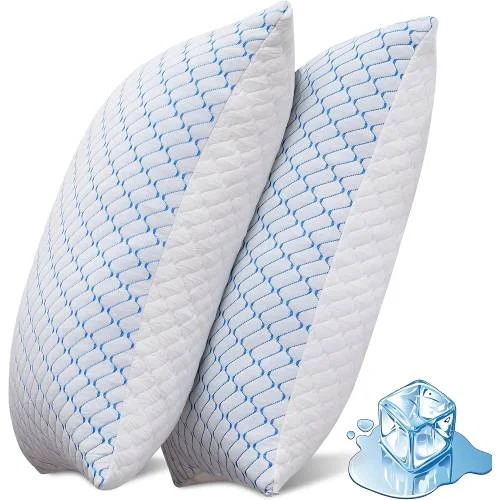

Side sleeping is one of the most common sleep positions, and for many people it's the most comfortable. It does ask more of your pillow, though. When you lie on your side, there's a gap between your head and the mattress roughly the width of your shoulder. If the pillow doesn't fill that gap, your neck bends to make up the difference, and you can wake up stiff.
Start with loft
Loft is the height of the pillow. Side sleepers generally need a medium-high to high loft so the head stays level with the spine. A simple check: lie on your side and ask someone to look at you from behind. Your nose should line up roughly with the center of your chest.
- Broad shoulders usually need a higher loft.
- A softer mattress lets your shoulder sink in, so you may need a slightly lower pillow.
Then firmness
A pillow that's too soft collapses under your head during the night. Medium-firm to firm pillows keep their shape longer, which matters more for side sleepers than for back sleepers.
Compare fill types
| Fill | Feels like | Good to know |
|---|---|---|
| Memory foam | Contours slowly to your head and neck | Holds its shape well; can feel warm |
| Shredded foam | Adjustable and moldable | Add or remove fill to change the loft |
| Latex | Responsive and springy | Durable and naturally cooler |
| Down or down-alternative | Soft and squishable | Often needs folding or plumping to stay high enough |
Small changes that help
- Put a pillow between your knees. It keeps your hips level and takes pressure off your lower back.
- Hug a second pillow. Supporting your top arm stops your shoulder rolling forward.
- Choose breathable bedding. Cotton sheets and a pillowcase with a cooling side help if foam runs warm.
- Replace pillows regularly. If yours no longer springs back after you fold it, it's time.
Give it two weeks
Your body needs a little time to adjust to a new pillow. Unless it's clearly uncomfortable, try it for at least two weeks before deciding. Our return policy explains which bedding items can be returned.